

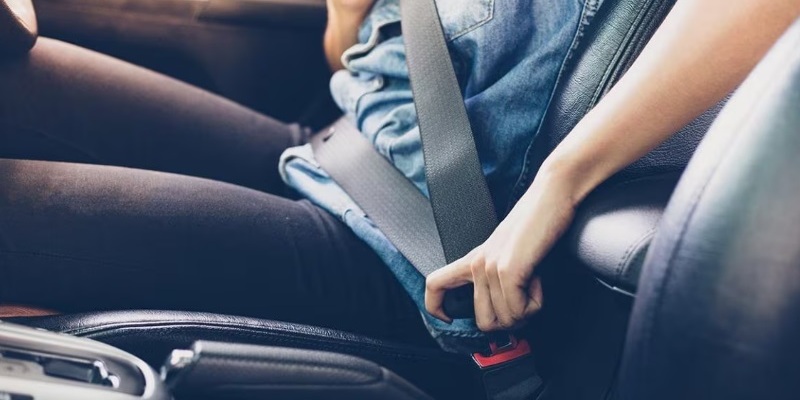
The safety and security of your car is a major concern. Advanced car safety devices, including but not limited to tire pressure monitoring systems, lane departure prevention systems, and driver assistance tools, have proven instrumental in preventing accidents that may lead to injuries or even fatalities.
Amidst all these novelties, the seatbelt remains possibly the most basic and primary safety measure in driving. These humble bands of cloth, often overlooked in our fast-paced daily life can determine between life and death and reduce the impact of an accident. Having insight into the importance of car seatbelts, how they function, and the laws related to their use in India can be of immense help in making safer options on the road.
List of Content
The Consequences Of Failing To Wear Seat Belts
How Do Seatbelts Work
Why Consider Putting On Seatbelts
The Fact File: A Statistical Viewpoint
Seat Belt Laws Of India: An Update 2024
Conclusion
Frequently Asked Questions
Major Consequences of Failing to Wear Seat Belts
The consequences of failing to wear seatbelts during accidents or collisions can be extremely severe for drivers, front-seat passengers, and rear-seat occupants. Studies reveal it can carry a high risk of:
Ejection from the Seat
The occupants of the front seat are likely to get ejected from the car during a collision and carry 30% more risk of dying compared to those who ride in the rear seat.
Severe Injury
Driving without being buckled can be awfully dangerous leading to traumatic brain injury, spinal cord injuries, or damage to one’s internal organs.
Increased Casualties
Statistics indicate that unbelted occupants are at a higher risk of casualty. As per WHO, proper use of seat belts can lessen the vulnerability of death of the front-seat passenger by up to 60% in a crash.
How Seatbelts Work?
When a car abruptly stops or collides, owing to the inertia of motion, an individual sitting in a moving vehicle is likely to be pushed forward, potentially causing major injuries. Seat belts are designed to work through a combination of restraint and energy absorption. They consist of a webbing strap, a retractor mechanism, and a buckle.
Here’s a breakdown of how they contribute to overall well-being:
Spreading Force of Impact
In the event of a collision, seat belts spread the force of the sudden impact across vital parts of the human body, including the chest, spine, pelvis, and shoulders. Thus it lessens the extent of injury by preventing occupants from being thrown sideways or forward.
Energy Absorption
Modern seatbelts feature energy-absorbing aspects including pretensioners and load limiters. Pre-tensioners tighten the seatbelt against the passenger’s body in the event of a crash and keep the occupants in their positions.
Similarly, load limiters work by releasing the belt webbing in a controlled way while lessening the force of the shoulder belt on the occupant’s chest. Often, Pretensioners work in combination with airbags to ensure the safety of occupants – once a crash occurs.
Prevention of Ejection
The purpose of seat belts is to keep passengers inside the vehicle in case of an accident. Ejection from the vehicle happens to be highly dangerous and increases the chances of fatal injuries.
Why Consider Wearing Seatbelts?
Before hitting the road, make sure to put on the car seat belt for several reasons:
Saving Lives
Seatbelts keep a person in place while the vehicle is moving so that, in case of a collision, they will not be flung around or thrown out of the vehicle owing to inertia.
Prevention of Injuries
Wearing seat belts can lessen the criticality of possible injuries such as head injuries, whiplash, injury of the spinal cord, and fractures or head injuries causing spot death.
Airbags Are not Adequate Alone
When someone skips wearing a seatbelt, it can make an airbag less effective and might cause injuries. This happens because seatbelts and airbags are designed to work together to keep people safe.
Avoid Fines
Not wearing a seatbelt may attract fines ranging from Rs.1000 to more in India which varies between State rules.
The Fact File: A Statistical Overview
The seatbelts are not just an optional accessory, but they are acknowledged as a fundamental safety feature designed to protect occupants in vehicles. Here’s a prevalence of road accidents in India for not using seat belts:
- Rapid Increase in Road Death Tally: With the escalating number of car owners in India, the number of major injuries to casualties in road accidents is on the rise, and one of the leading causes of it is sheer due to not putting on seat belts.
- Annual Statistics: Studies reveal that failure/ignorance to wear seat belts frequently ends up in road accidents raising an annual death toll ranging from 10,000 to 12,000, while the data varies between year to year
- Government Record: As reported by the Ministry of Road Transport and Highways, casualties caused by road account for around 20-25% due to not using seatbelts.
- Road Safety Reports: Various road safety reports along with studies suggest that proper seatbelt usage could prevent up to 50% of car accident fatalities.
- Comparing to Global Standards: The use of seatbelts is low in India compared to most developed countries where its severe enforcement has resulted in reducing traffic death rates.
Seat Belt Laws of India: An Update 2024
India has adopted several steps to ensure road safety, with regulations consistently evolving to tackle the challenges posed by road accidents.
As of 2024, the Indian government has strengthened its stance on seat belt usage through updated regulations aimed at enhancing road safety.
Mandatory Seat Belt Use
The revised regulations have made it compulsory for all passengers to wear seatbelts, not just the occupants of the front seat. The law also highlights the necessity of using for rear-seat occupants, who are also susceptible to injury during accidents. Under the Motor Vehicles Act of 1988, not putting on car seat belts is considered a traffic law violation.
This law was mandated following Cyrus Mistry’s fatal accident, emphasizing the gravity of seat belt use. Noteworthy, the penalty has increased from ₹100 to ₹1,000 or above for not wearing a seat belt in the recent amendments.
Enforcement, however, differs between states while the penalty may also include suspension of license, seizure of the vehicle, or may lead to detention in severe cases. So, always stay compliant with the traffic rules not only to avoid fines but also to ensure the safety and well-being of you and your family members.
Awareness Campaigning
Apart from the imposition of regulatory changes, the government of India has undertaken parallel drives through public awareness campaigns to make people understand the gravity of wearing seat belts.
By highlighting real-life incidents, statistics penalties, and advantages of wearing seat belts, these campaigns aim to promote a culture of safety and discipline while driving.
Standards of Vehicles
New regulations also emphasize improving standards of vehicles to ensure that belts are made of high quality to secure passengers optimally on the road. This also includes periodic checks and certifications as part of safety standards.
Conclusion
The importance of wearing car seat belts simply can never be underrated. Despite they may seem to be a simple instrument, however, their effectiveness in bringing down casualties and serious injuries on the road has been proven time and again.
Understanding their mechanisms and appreciating their benefits upon usage – rather, lack of it – can help promote a safety culture. With updated regulations and continuous awareness drives, the objective is to make seat belt usage the standard practice while driving a car, that eventually helps saving lives and ensuring road safety.
Frequently Asked Questions
Q1. What is the right way to buckle a seat belt?
An appropriately fitted shoulder belt should be snug across the middle of your chest and shoulder, not across the neck. Similarly, the lap belt should lie low across the hip snugly, below the abdomen or belly. The belt needs to be fastened until it sounds ‘click’. Also, give the strap an extra pull to ensure it’s tightly and rightly worn.
Q2. How to secure my child on car seat?
It is highly recommended to let the child sit in the rear seat. Make sure to fit the strap against the child’s chest and hips ensuring there is no slackness.
Q3. Are seat belts in the rear as crucial as seat belts in the front?
Yes, the rear seatbelts are equally important. This would prevent rear passengers from being ejected or thrown around during a collision, ensuring their well-being while reducing the risks of injuries.
Q4. Which type of car seat belt is offered in modern vehicles?
Most new-generation vehicles offer a 3-Point Seatbelt combining both the lap and shoulder belt. Typically, they form a Y-shape with buckles toward the vehicle’s center. The seatbelts are ideal for spreading out the power occupants may experience in the impact of a car crash.
Q5. Is It important to replace seatbelt overtime?
Yes, in general, it is suggested to replace seat belts after 10-15 years. Moreover, in the event of an accident, aging, or any kind of malfunctioning, it should be replaced right away. Evaluate the integrity of them regularly for fraying fabric, lock issues, and wear and consider replacing them immediately if any issue is found.


